.png)
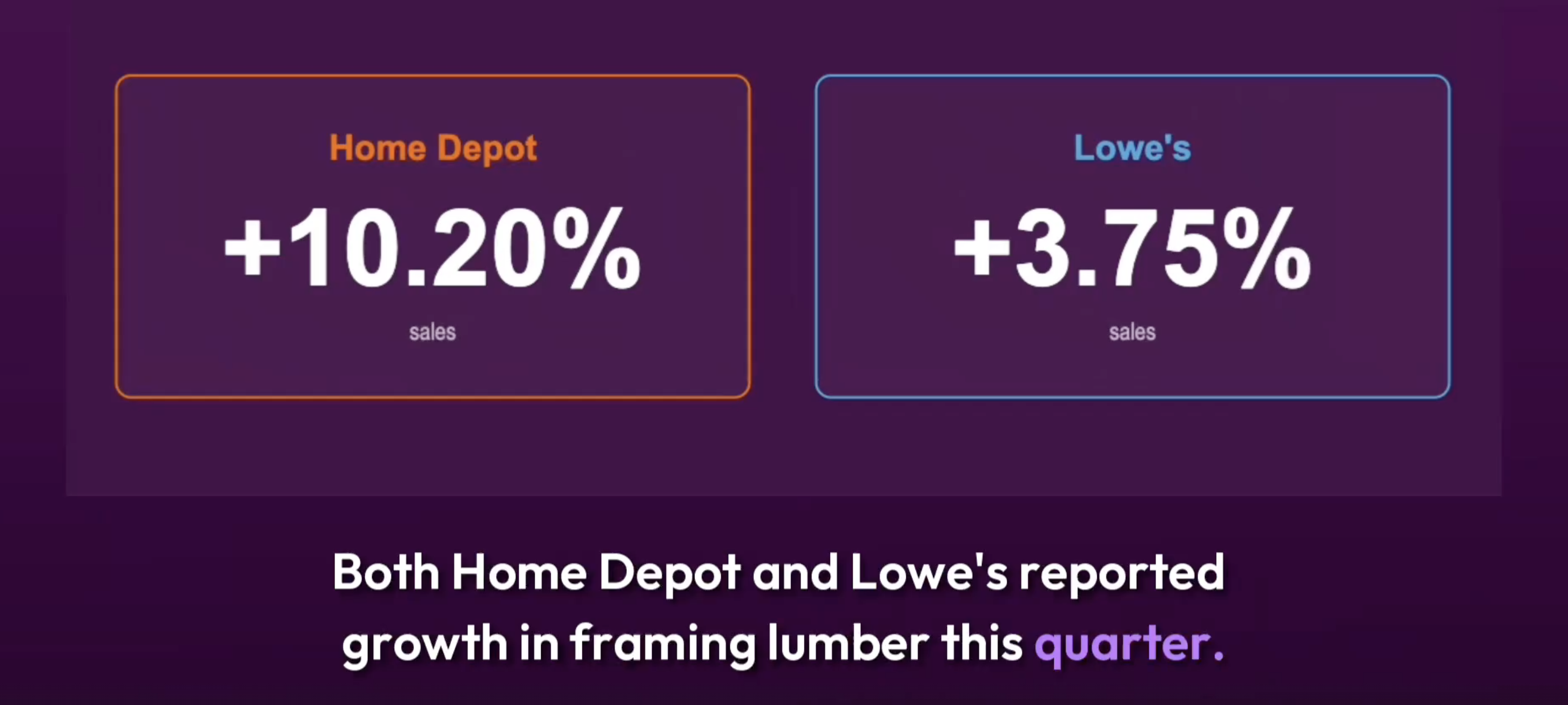
Home Depot is winning decisively in framing lumber. While both retailers reported growth in Q2 2026, Home Depot's sales grew 10.2% compared to Lowe's 3.75%. More importantly, Home Depot achieved this growth while reducing its store footprint by 18,600 locations, while Lowe's added 4,200. This divergence reveals fundamentally different category management strategies. Home Depot wins through customer conversion and sales productivity; Lowe's wins through distribution expansion. For manufacturers, this distinction matters enormously when allocating assortment, supply, and trade spend.
The Numbers: Home Depot's 3x Growth Advantage
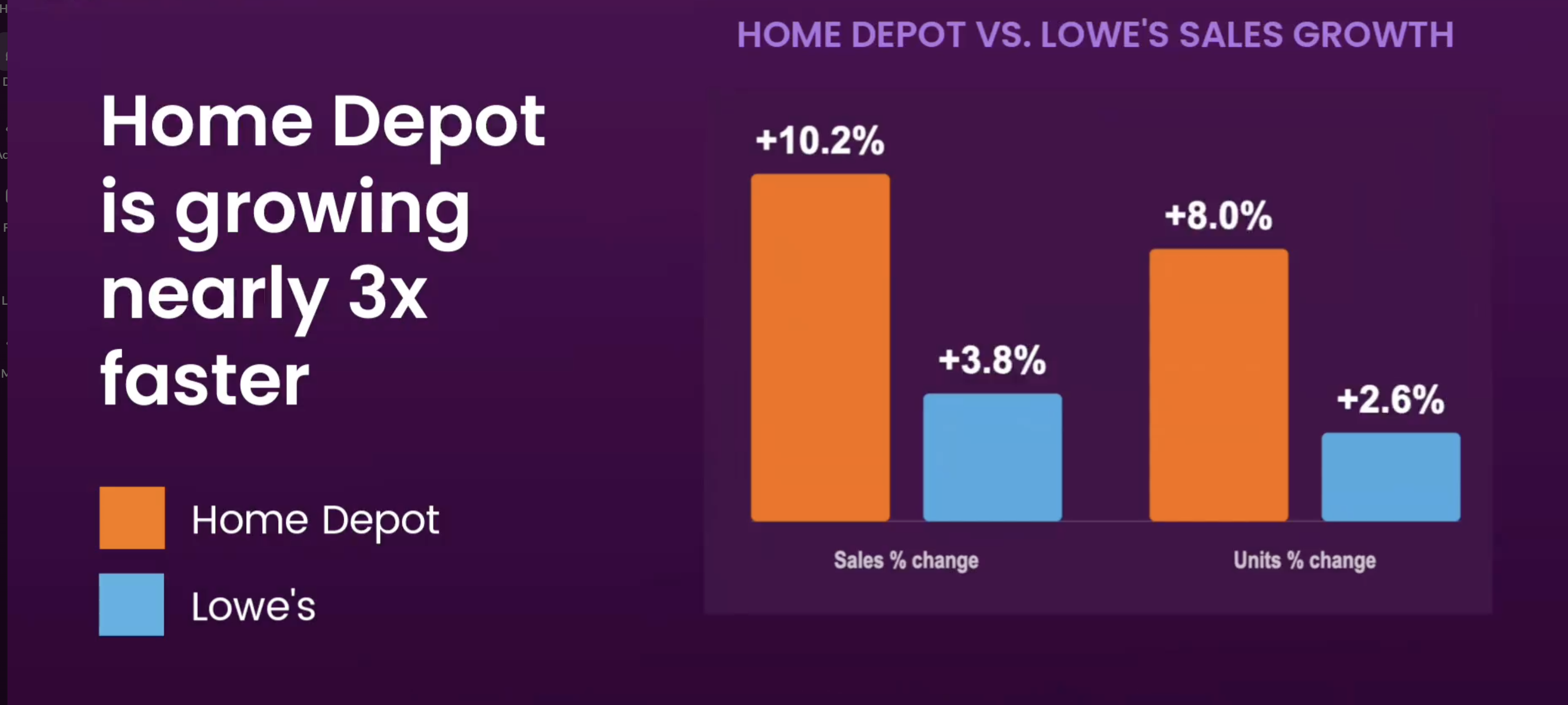
Let's start with the growth rates, because they tell the clearest story. In Q2 2026 (May–July), Home Depot's framing lumber sales grew 10.2% year-over-year, while Lowe's grew 3.75%. On units, Home Depot grew 8.0% versus Lowe's 2.6%. By every absolute measure, Home Depot is growing nearly three times faster.
But here's the deeper insight: both retailers are profitable and both are growing. This isn't a story about one retailer winning and one losing. It's a story about two very different playbooks converging on the same category.
Strategy Divergence: Expansion vs. Productivity
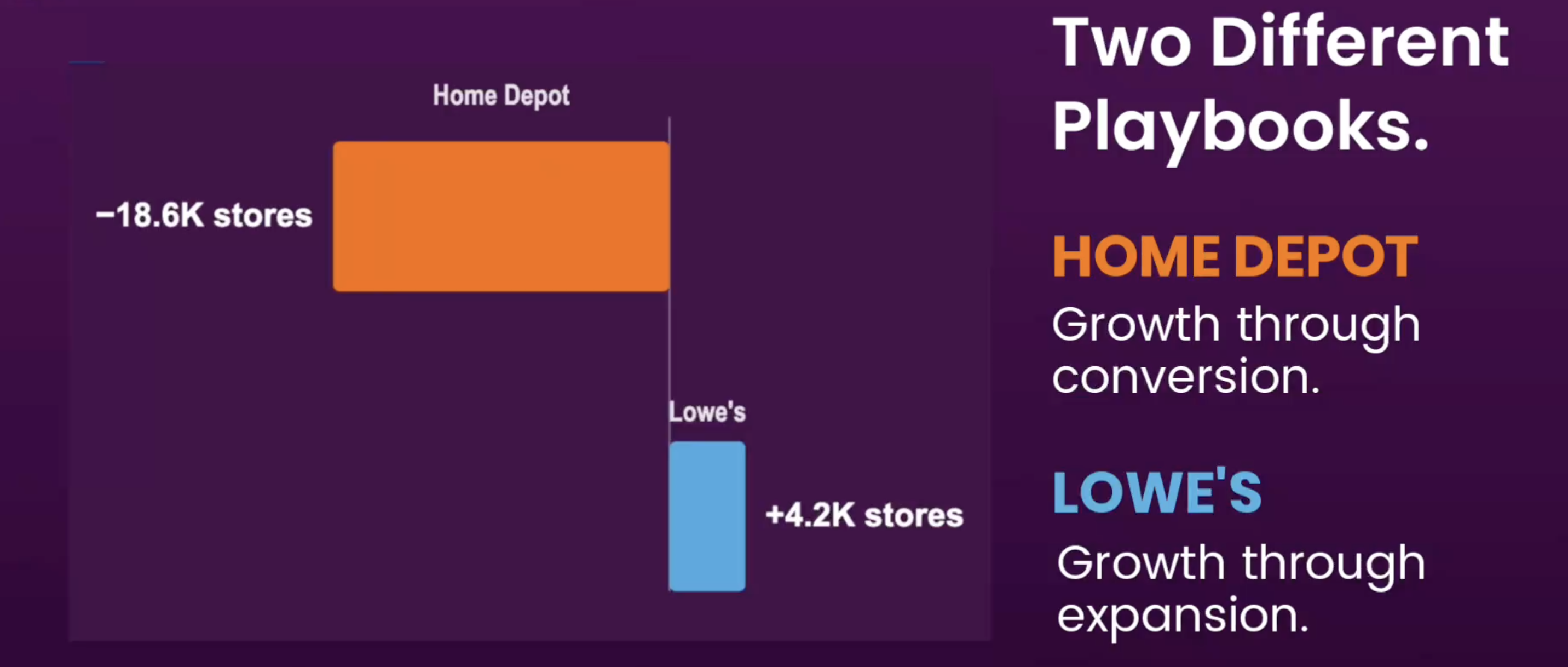
This is where the comparison gets strategic. Lowe's is pursuing a distribution expansion strategy. The retailer added 4,200 store locations carrying framing lumber in Q2 2026 compared to the prior year. That's a deliberate capital allocation decision: Lowe's is betting that framing lumber demand warrants more shelf space in more stores. It's the "grow by widening reach" playbook.
Home Depot is doing the opposite. The retailer actually reduced its store footprint by 18,600 locations carrying framing lumber. Yet Home Depot is still growing sales faster than Lowe's. This signals a "do more with less" playbook. Home Depot is winning through higher sales intensity per store, not store count.
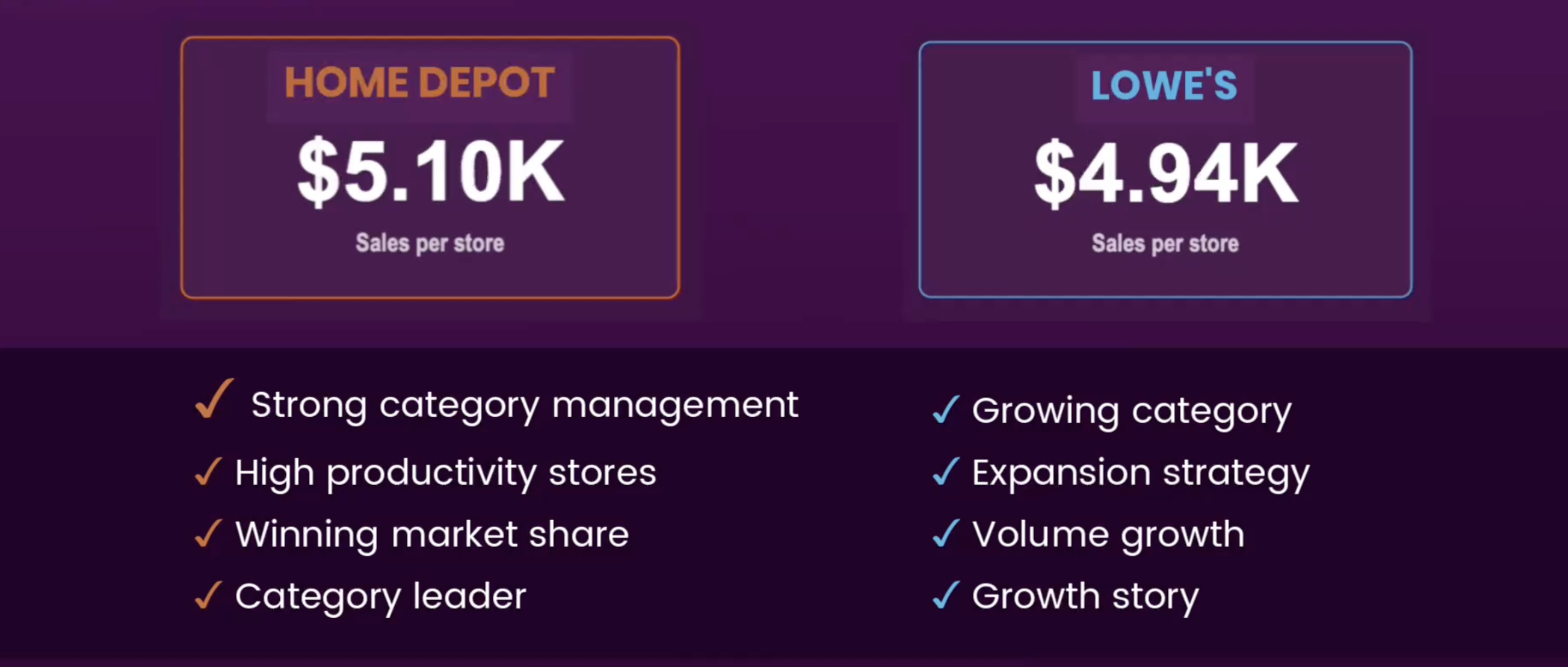
To quantify this: Home Depot's sales per store in Q2 2026 were $5.10K, while Lowe's were $4.94K. Home Depot is moving more framing lumber through fewer locations which illustrates superior category management in this case.
Why This Matters for Your Category Strategy
If you manufacture framing lumber, or any structural material, this divergence tells you which retailer has stronger conviction about the category. When a retailer expands distribution across thousands of stores, it's saying "we believe demand will fill this space." When a retailer shrinks footprint but grows sales, it's saying "we're being selective about where this category goes, but where it does go, it's performing exceptionally well."
Home Depot's approach suggests category discipline. Lowe's approach suggests volume optimization. For manufacturers, this distinction should influence where you invest:
- If your goal is high velocity and controlled distribution, Home Depot is the partner. Fewer doors, higher intensity.
- If your goal is maximum market penetration and assortment breadth, Lowe's is expanding to accommodate you.
- If you're supply-constrained, Home Depot should be your priority. They're converting customers better per unit of inventory.
- If you have supply flexibility, you can serve both playbooks—but allocate your innovation and trade spend to the winning strategy first.
Is This a Market Trend or a Retailer Advantage?
One critical question remains: Is framing lumber growing across the building materials market, or is Home Depot simply winning share from competitors and Lowe's? The data we have is retailer-level, not market-level, so the Lowe's and Home Depot data analyzed for this piece alone cannot answer that question. However, the pattern does suggest market strength plus retailer differentiation. Both retailers are growing, which points to underlying category demand. But Home Depot is growing faster with less footprint, which points to Home Depot being the more effective category manager.
For manufacturers, this ambiguity is actually useful information. It means contractor demand for framing lumber is solid enough to support both strategies. Lowe's can grow by expanding, and Home Depot can grow by intensifying. The category has room for both.
What's Next: Q3 Signals to Watch
Q3 earnings will show whether Q2's divergence was a seasonal blip or a genuine shift in retailer strategy. Watch for:
- Does Home Depot's sales per store remain above Lowe's, or do they converge?
- Does Lowe's continue expanding distribution, or does the retailer pause?
- Do both retailers' growth rates persist, accelerate, or decelerate?
- Does one retailer begin promotional activity to defend share?
These signals will clarify whether the Lowe's vs. Home Depot divergence is structural (different long-term strategies) or tactical (short-term positioning in a volatile market).
We break down every angle of this comparison—with the charts and the data behind them—in our latest category deep-dive video. Watch it here.
FAQ: Home Depot vs. Lowe's Framing Lumber Performance
Why is Home Depot growing faster if it's shrinking its footprint?
Home Depot is winning through sales productivity per store. When a retailer can grow sales while reducing store count, it means the remaining stores are performing so well that they more than offset the lost volume from closed locations. This signals stronger customer conversion and better category execution at the store level.
Should I prioritize Home Depot over Lowe's for framing lumber?
It depends on your supply and strategy. If you're supply-constrained or want high-velocity distribution, Home Depot is the stronger partner. If you want broad market coverage and Lowe's has committed to expansion, both retailers can coexist in your strategy. But allocate your best assortment and trade support to Home Depot first. They're currently positioned as the more effective category manager.
Is framing lumber a growth category or are these retailers just jockeying for position?
Both. The fact that both retailers are growing indicates underlying category demand and that framing lumber is a growth market. The fact that they're growing at different rates and using different strategies indicates they're also competing for share and positioning themselves differently. Contractors are still building, which benefits both retailers. But Home Depot is winning the category management battle.
What does "sales per store" really tell you?
Sales per store measures how much revenue each location is generating. Higher sales per store typically means better customer conversion, less wasted shelf space, and more efficient inventory management. Home Depot's $5.10K per store vs. Lowe's $4.94K means Home Depot is extracting more value from each unit of real estate dedicated to framing lumber.
The Bottom Line: Pick Your Partner Wisely
Home Depot and Lowe's are pursuing fundamentally different strategies in framing lumber. One is optimizing for conversion and intensity; the other is optimizing for reach and scale. Both are working, but they're not equivalent. If you supply this category, your assortment allocation, supply chain prioritization, and trade investment should reflect which strategy aligns with your business model. Home Depot is the stronger category manager. Lowe's is the faster-expanding opportunity. You likely need both, but the weight of your effort should follow the weight of retailer effectiveness.
This is the kind of category-level visibility that changes how you walk into your next merchant meeting. Datavations Pulse delivers free competitive intelligence from your biggest retail accounts, filtered to the categories you actually compete in, straight to your inbox. Sign up at datavations.ai/pulse.
.png)