.png)
Published: August 18, 2026 | Analysis Period: May–July 2026 | Source: Datavations Home Depot Census Data + Home Depot Q2 Earnings Release
The Earnings Paradox: Strong Sales, Modest Comp Growth
Home Depot just reported Q2 earnings that reveal something counterintuitive happening in the home improvement market. It's not what most manufacturers think.
The headline sounds strong: $47.9 billion in sales, up 5.7% year-over-year. That's solid growth. But look closer at the comparable store sales metric and a different story emerges. Home Depot's comp sales grew just 1.7% while the average customer ticket climbed 2.8%. At the same time, customer transactions actually declined 0.8%.
Key Metric Divergence:• Comparable Store Sales: +1.7% YoY• Average Ticket Size: +2.8% YoY• Customer Transactions: −0.8% YoY
Fewer customers walking into stores, yet revenue is growing faster than store traffic would suggest. So what's driving the divergence?
Home Depot's own commentary points the way: "broad-based demand across the business as customers continued to engage in smaller projects."
Smaller projects, not major renovations. Not kitchen remodels or full-home updates. These are smaller, targeted improvements. And here's what matters: customers are bundling them into single shopping trips. They're not doing one project per visit. They're doing two, three, or more at once.
That's why the average ticket is climbing. It's not that each customer is buying one expensive item. It's that each customer is buying more valuable baskets. Paint with brushes and rollers. Tool bundles with batteries and cases. Deck refreshes with premium railings. One trip. Multiple categories. Higher value per basket.
For manufacturers, this isn't a headwind. It's a clear signal about how to compete in the home improvement market right now.
Chart 1: The Paradox — Comp Sales Growth vs. Average Ticket Growth
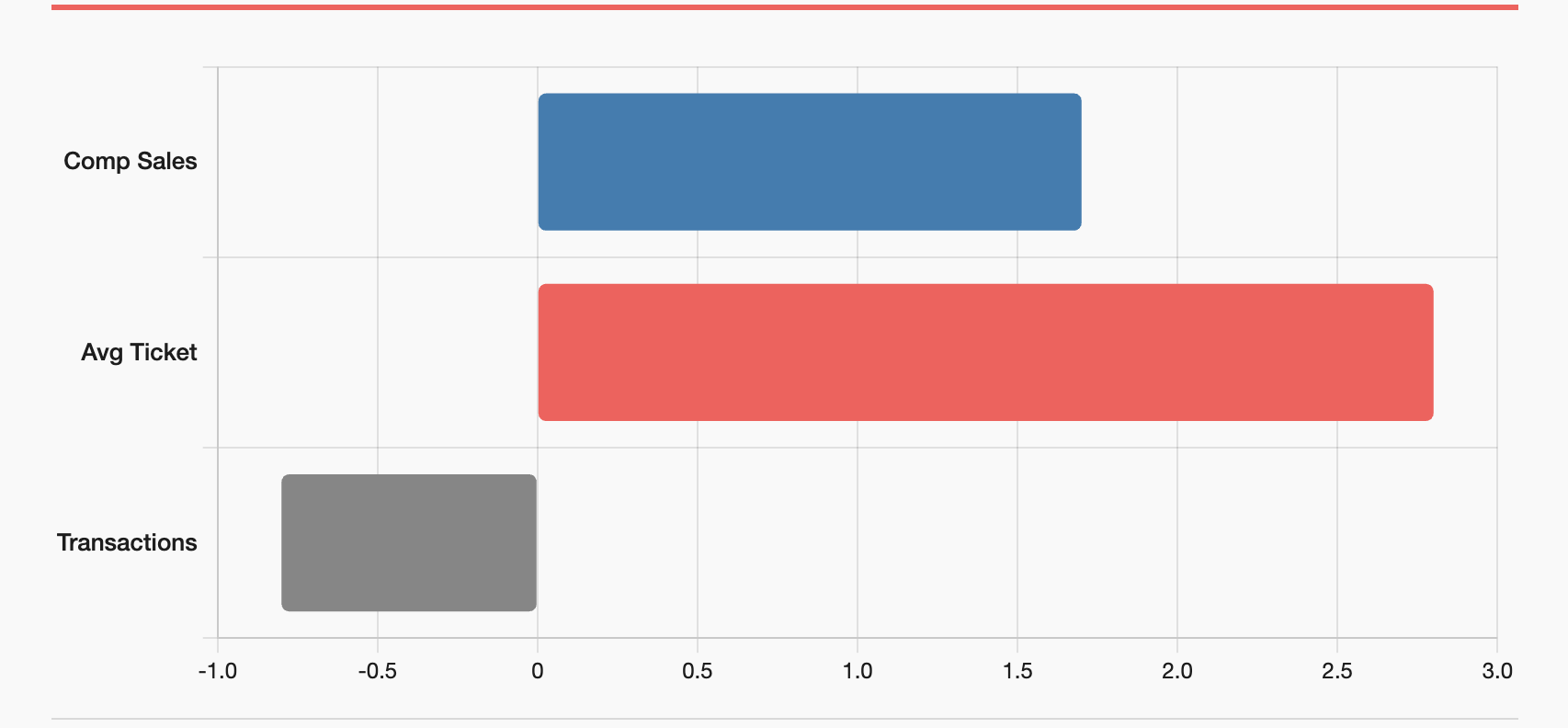
Key Insight: Comp sales grow at 1.7% while average ticket grows at 2.8%—despite transaction decline of 0.8%. This divergence signals bundling behavior: fewer customers, higher-value baskets.
The Data Behind the Story: Two Categories That Show How Customers Are Really Shopping
To understand what "smaller projects" actually means in terms of product performance, we analyzed Home Depot's category trends across two distinct product areas using Datavations' Bolt Analytics. What we found confirms the bundling thesis—and reveals how premium positioning drives growth.
Power Tool Combo Kits: Premium Bundling Works
Power Tool Combo Kits at Home Depot reveal the most important part of this story. Looking at May–July 2026 compared to the same period in 2025, the data shows textbook trading-up behavior:
Performance Summary:• Sales: $167.6M, up 6.1% YoY• Units: 673.8K, up 1.1% YoY• Average Selling Price: $251.10, up 5.0% YoY• Sales per Point of Distribution: $2,500.95, up 6.2%
Here's what makes this data critical: units are essentially flat, yet revenue is growing 6x faster than unit growth. This doesn't happen by accident. It happens because customers are choosing better bundles.
A customer who would have bought a single $100 drill is now buying a $250 combo kit that includes the drill, an impact driver, two batteries, a charger, and a carrying case. Same trip to Home Depot. Same transaction. Different value.
This is premium bundling at scale. And it proves something manufacturers often overlook: bundled solutions command pricing power. Combo kits showed 6.2% productivity gains per store despite modest unit growth because the bundles work. Customers see convenience and value in complete solutions, not individual tools.
The promotional profile supports this. Despite 91% of Power Tool Combo Kits being part of promotional activity, the category still achieved 5% ASP growth. That suggests promotions are on lower-tier bundles while premium bundles hold their pricing. In other words, Home Depot is using bundling strategy to command higher prices, not to discount commodities.
For tool manufacturers, the implication is direct: invest in combo kits with integrated solutions (batteries, cases, accessories). The ASP premium is real.
Chart 2: Power Tool Combo Kits — Unit Growth vs. Revenue Growth
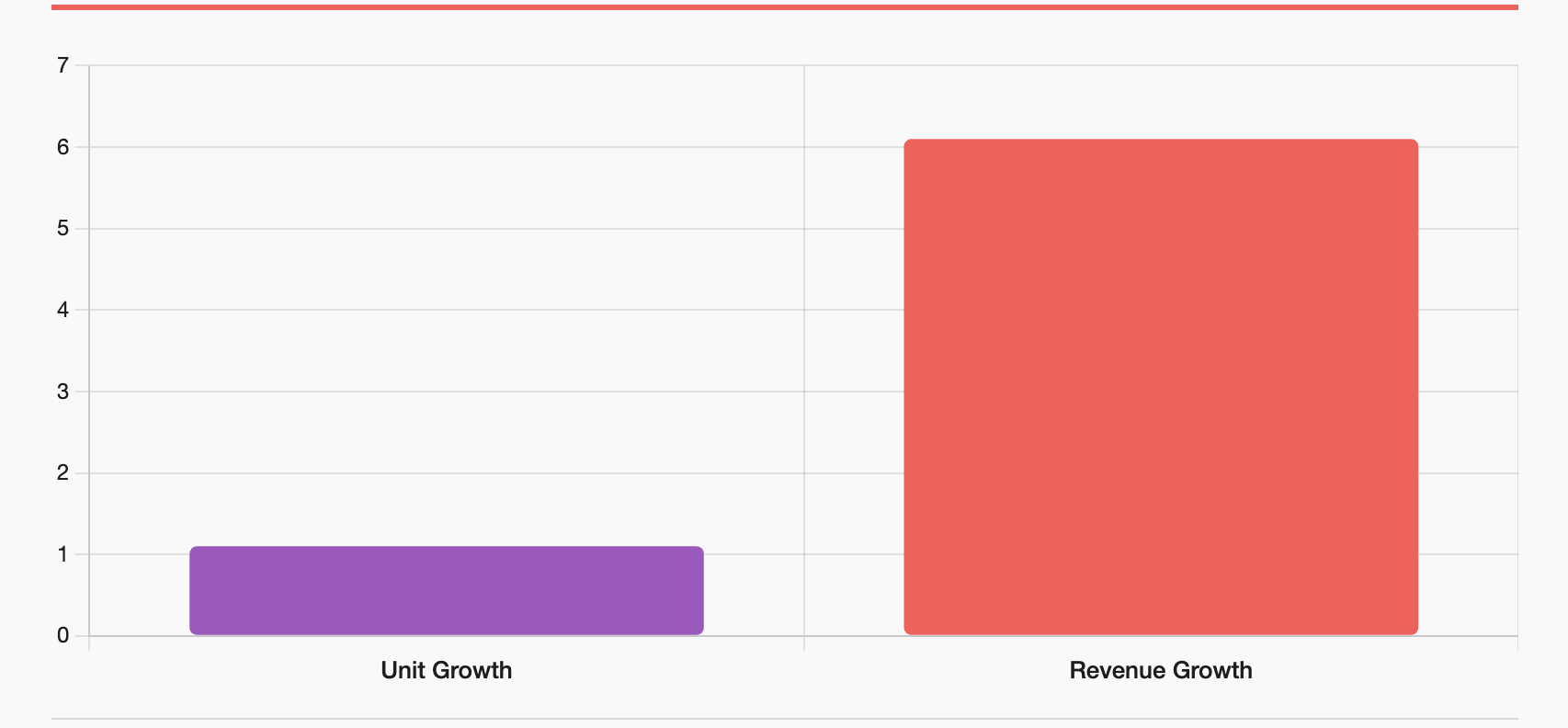
Key Insight: Units grow 1.1% but revenue grows 6.1%—a 6x divergence. This reveals ASP-driven growth: customers trading up to premium bundles with batteries, cases, and multiple tools.
Deck Railing Systems: Premium Trading-Up in Outdoor Projects
The third category in this story reveals an important expansion of the smaller-projects narrative: it's not just interior spaces that customers are refreshing. Outdoor projects are part of this bundling trend too.
Deck Railing Systems at Home Depot (May–July 2026 vs. May–July 2025):
Performance Summary:• Sales: $51.4M, up 6.7% YoY• Units: 606.5K, essentially flat (up 0.015%)• Average Selling Price: $84.69, up 6.6% YoY• Sales per Point of Distribution: $1,378.18, stable• Promotional Intensity: 81% of SKUs (down from 89% prior year)
Deck railings demonstrate that the "smaller projects" trend includes outdoor home improvement, not just interior refreshes. A customer upgrading their deck with new premium railings isn't doing a major renovation. They're doing a targeted outdoor refresh, and that matters.
The premium story is clear: despite flat units, sales are up 6.7% because ASP is up 6.6%. Customers are trading up to premium railing systems with composite materials, modern designs, and higher-end finishes instead of settling for basic options.
The year-over-year decline in promotional intensity (from 89% to 81% of SKUs on promotion) is particularly telling. Home Depot doesn't need to discount premium deck railings because customer demand is strong enough to sustain higher margins. That's pricing power in action—the kind manufacturers dream about.
For outdoor and structural manufacturers, the data validates a premium positioning strategy. Customers undertaking outdoor refreshes will trade up for quality, design, and durability. Focus on innovation in materials, finish variety, and design aesthetics. Higher ASP is achievable.
Chart 3: Premium Trading-Up Across Categories (ASP % Change YoY)
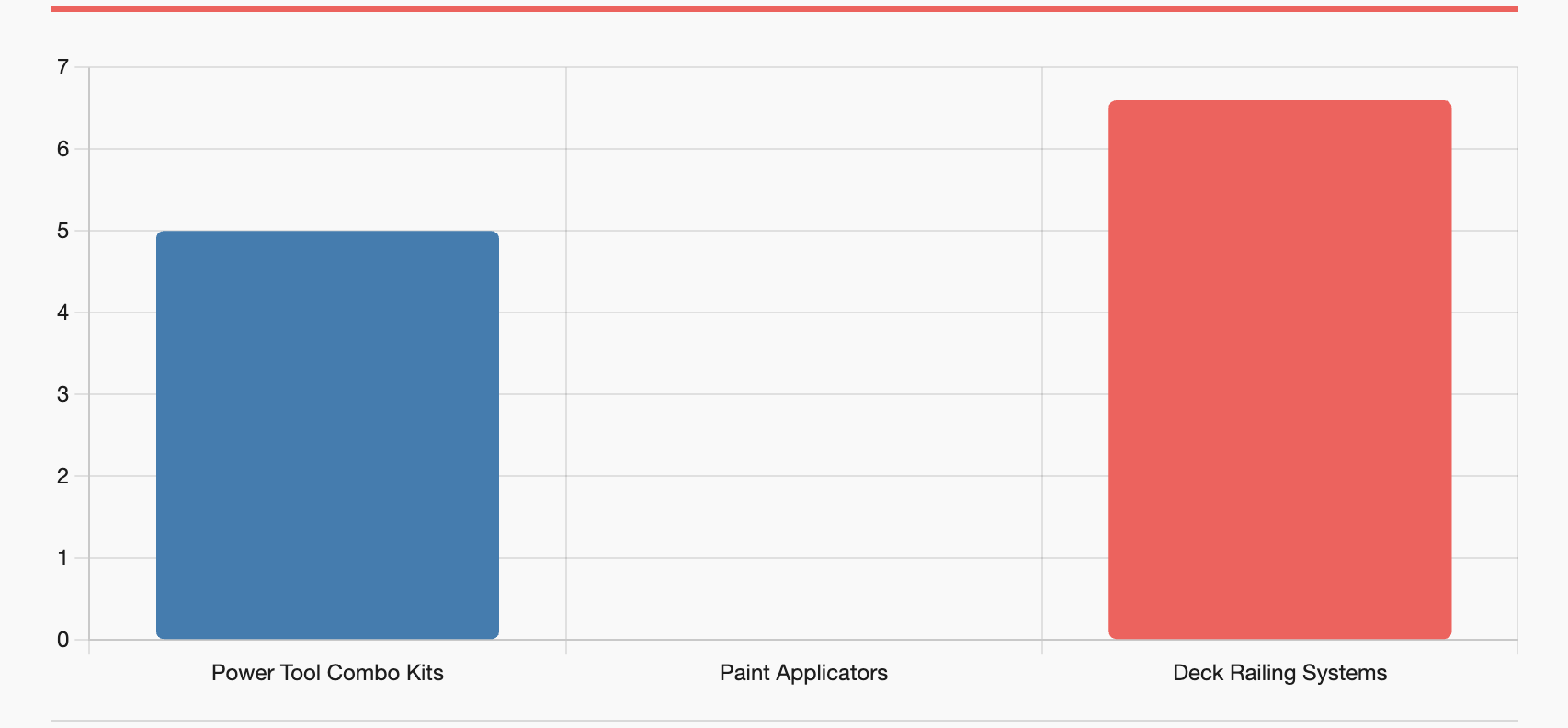
Key Insight: Power Tool Combo Kits (+5.0%) and Deck Railing Systems (+6.6%) both show ASP growth, confirming premium bundling and customer trading-up behavior across both indoor and outdoor smaller projects.
What This Means for Your Category Strategy
Power Tool Combo Kits and Deck Railing Systems tell a unified story about how manufacturers should approach Home Depot and the broader home improvement market in 2026. There are three core takeaways.
1. Bundling Is the Dominant Shopping Behavior, Not the Exception
Customers aren't buying single items anymore. They're buying complete solutions. That means a tool kit with batteries and case, or a deck refresh with premium railings. Manufacturers who design and market in bundles—not individual SKUs—will win shelf space and customer preference.
2. Premium Bundling Drives Revenue Without Needing Volume Growth
Look at the data: Power Tool Combo Kits grew sales 6.1% on just 1.1% unit growth. Deck Railing Systems grew sales 6.7% on essentially flat units. That revenue growth comes from customers trading up to premium bundles instead of buying basic options. The implication is direct: you don't need to sell more units to grow revenue. You need to make your units more valuable.
3. Smaller Projects Signal a Market Shift, Not a Contraction
The "smaller projects" narrative might sound like bad news at first—smaller projects could mean smaller spend per customer. But that's backwards. Smaller projects actually mean more frequent shopping trips, more bundled purchases per visit, and higher-value baskets when you're bundled with complementary products. It's a market shift, not a shrinking opportunity.
Is This Home Depot Execution or Industry Trend?
Home Depot's Q2 earnings show strong execution around bundling and premium positioning. But here's the critical question: is this a Home Depot-specific strategy, or is it happening across the entire home improvement channel?
That answer matters to manufacturers. Tomorrow, Lowe's reports Q2 earnings, and that data will tell us whether the smaller-projects, bundling, premium-trading-up trend is an industry-wide shift or a Home Depot competitive advantage.
If Lowe's shows similar comp sales divergence and category performance patterns, manufacturers can confidently invest in bundled solutions and premium positioning across all big-box retail. If Lowe's data points in a different direction, it signals that Home Depot has found a differentiated market strategy. That would mean manufacturers need to tailor their approach by retailer instead of applying one unified bundling strategy across the board.
We'll have clarity tomorrow. For now, Home Depot's data is clear: bundling works, premium positioning commands higher margins, and assortment breadth matters. Build your category strategy on that foundation.
Ready to Dig Deeper Into Your Category?
Home Depot's earnings reveal a clear pattern: bundling works, premium positioning is viable, and smaller projects are driving category performance in new ways. But what does this mean for your specific category and your competitive position?
Contact us to discuss the full Home Depot Q2 category analysis. Our analytics team will walk you through brand-level performance, distribution trends, competitive positioning, and what these trends mean for your retail roadmap, pricing strategy, and assortment mix.
Contact Us
Sources & Data References
Home Depot Q2 FY2026 Earnings Release: Home Depot, Inc. (August 2026) | https://investor.homedepot.com
Category Performance Data: Datavations Home Depot Census Data | May–July 2026 vs. May–July 2025 | Real-time data
Metrics Defined: ASP (Average Selling Price) = Total Revenue ÷ Total Units | Sales per Point of Distribution = Revenue ÷ Store Count | YoY = Year-over-Year comparison (same calendar period)
Analysis by: Datavations, Inc. | Retail Intelligence for Home Improvement & Building Materials | August 18, 2026
.png)